Product
One sitemap in, a defensible report out
Vercatus is a machine visibility intelligence platform, not a crawler that counts missing meta descriptions. It measures your machine readership in three layers — reach, understanding and citability — and reports the difference between what you published and what machines got.
How it works
Twelve steps, six of which need no model at all
Discover and sample
Every URL in your sitemap index is mapped and clustered by template and language, then sampled so each pattern is represented — a few hundred pages can speak for a million.
Fetch as every machine
Each page is requested as a plain HTTP client, a real browser, a browser with JavaScript disabled, Googlebot, and five AI crawlers. The browser load also measures the page as a visitor experiences it.
Build the knowledge graph
Entities are resolved across pages and linked to Wikidata; factual claims are extracted and scored for how specific and checkable they are; each page's answerable questions are recorded.
Simulate the answer
A retrieval engine over your own passages answers each question in your intent space, and judges whether the answer was complete, grounded, and cited from the page you would have chosen.
Review and rank
Specialist analysis is checked by an adversarial reviewer that deletes anything unsupported. What survives is ranked by impact against effort, each item naming the metric and the pages to measure it on.
Brief and verify
A plain-language brief is written for the board. Findings keep a stable identity across runs, so when you implement one the next run tells you whether the number moved — against pages you did not change.
The workspace
Built for a portfolio, not a page
Every screen below is the product as it runs today, on a real analysis.
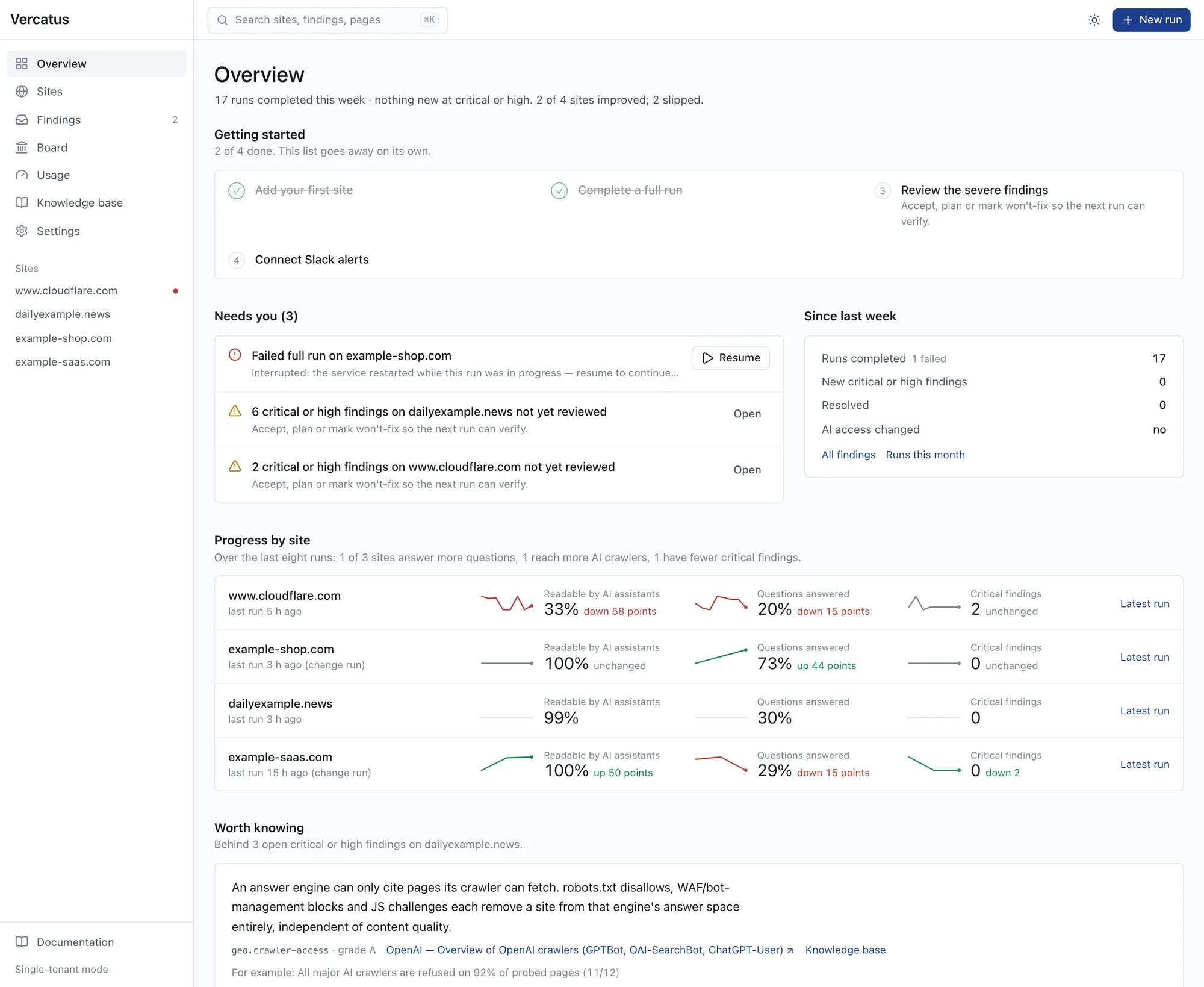
Overview
What happened since last week in one sentence; what needs a person, with the action on the row; each site's direction over its last runs in the three numbers that matter; and the one knowledge-base entry your current worst findings rest on.
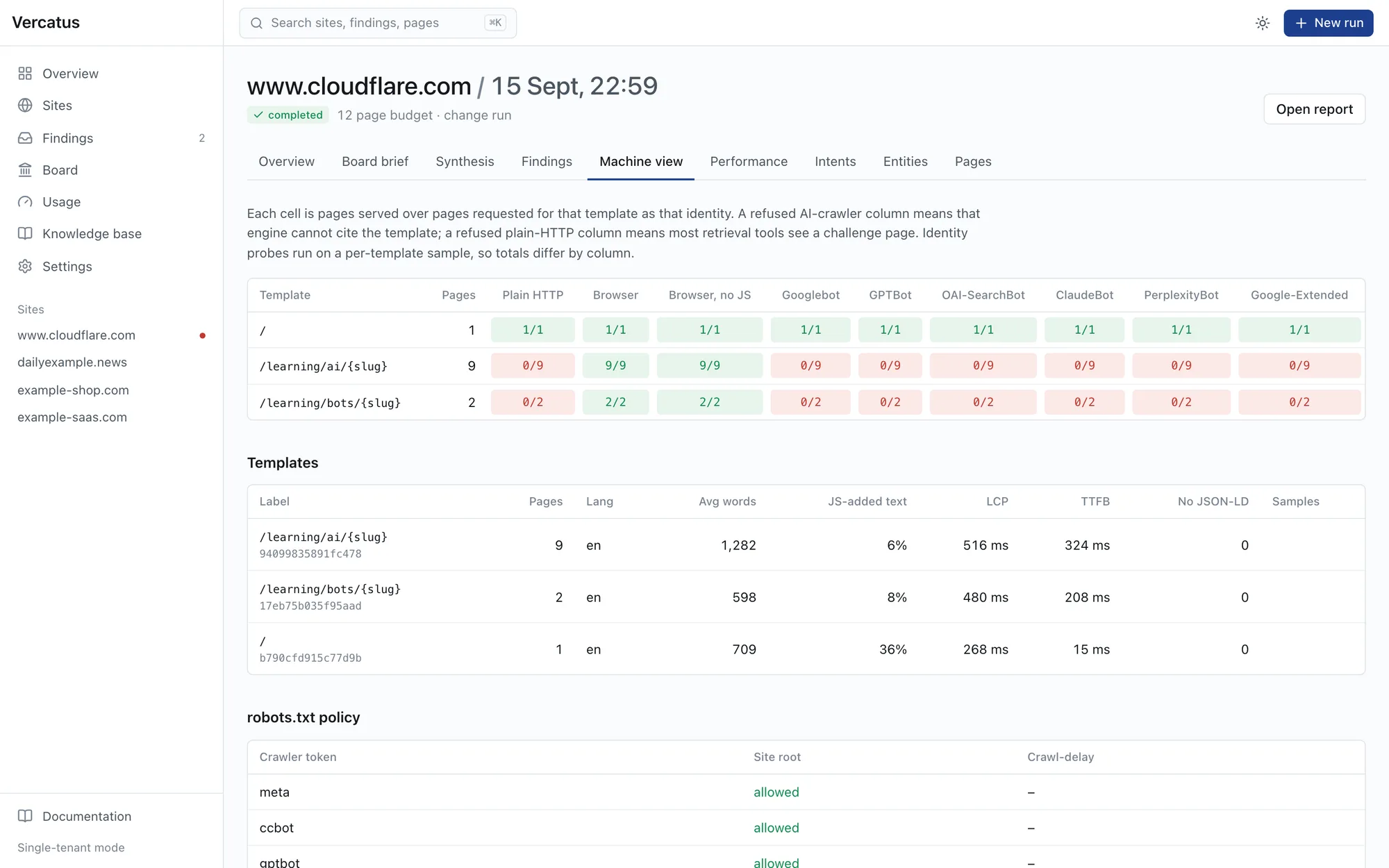
Machine view
The access matrix: which identity got which response on which template. A refused AI-crawler column means that engine cannot cite the template; a refused plain-HTTP column means most retrieval tools see a challenge page. The finding is the row that is red.
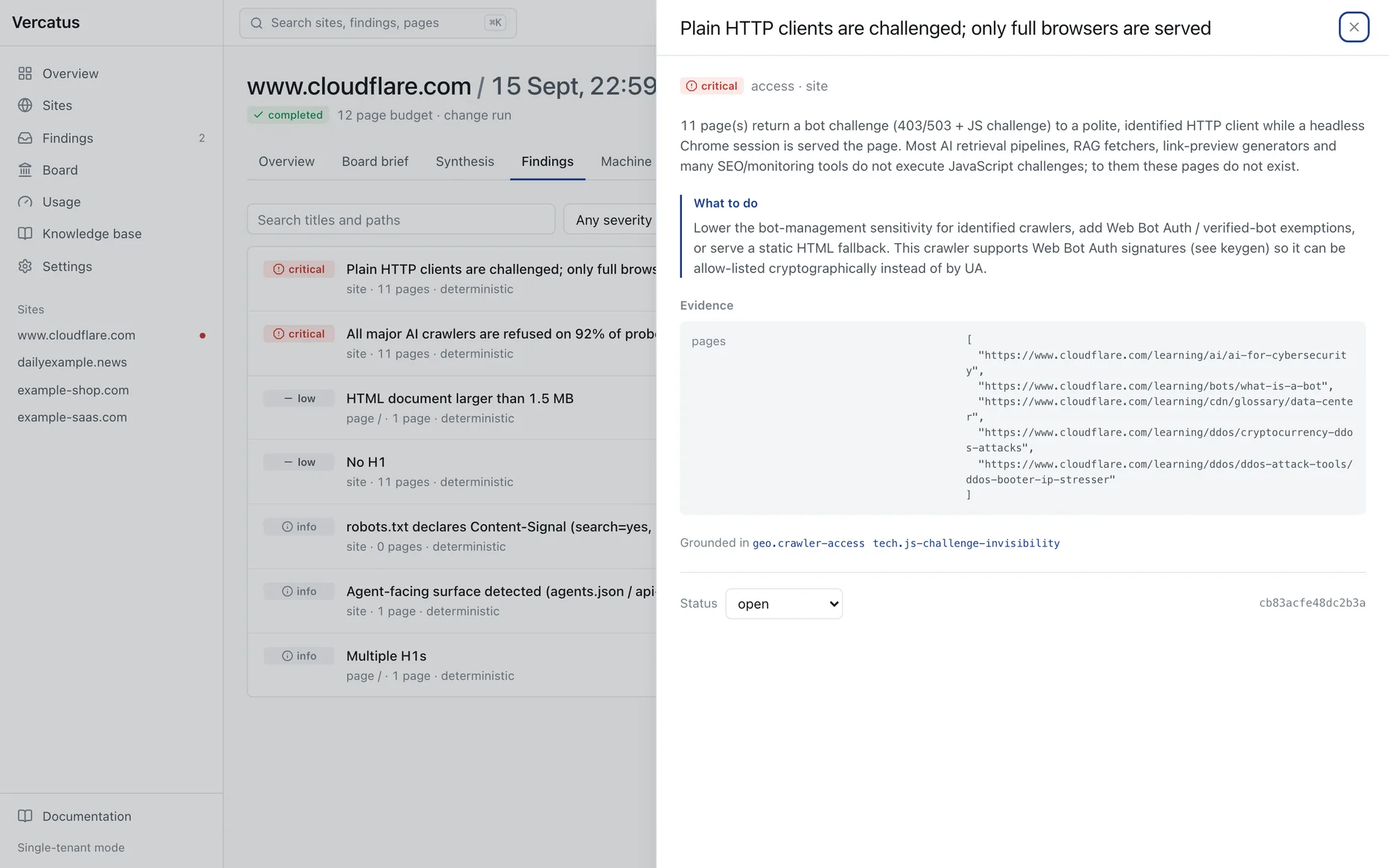
Findings, with their evidence
Everything that survived review, most severe first, across all sites. Each one carries a plain-language line for a non-technical reader, the evidence it rests on, the hypotheses it cites with their grade, and the number that should move. Accept, plan or mark won't-fix; the next run checks whether you were right.
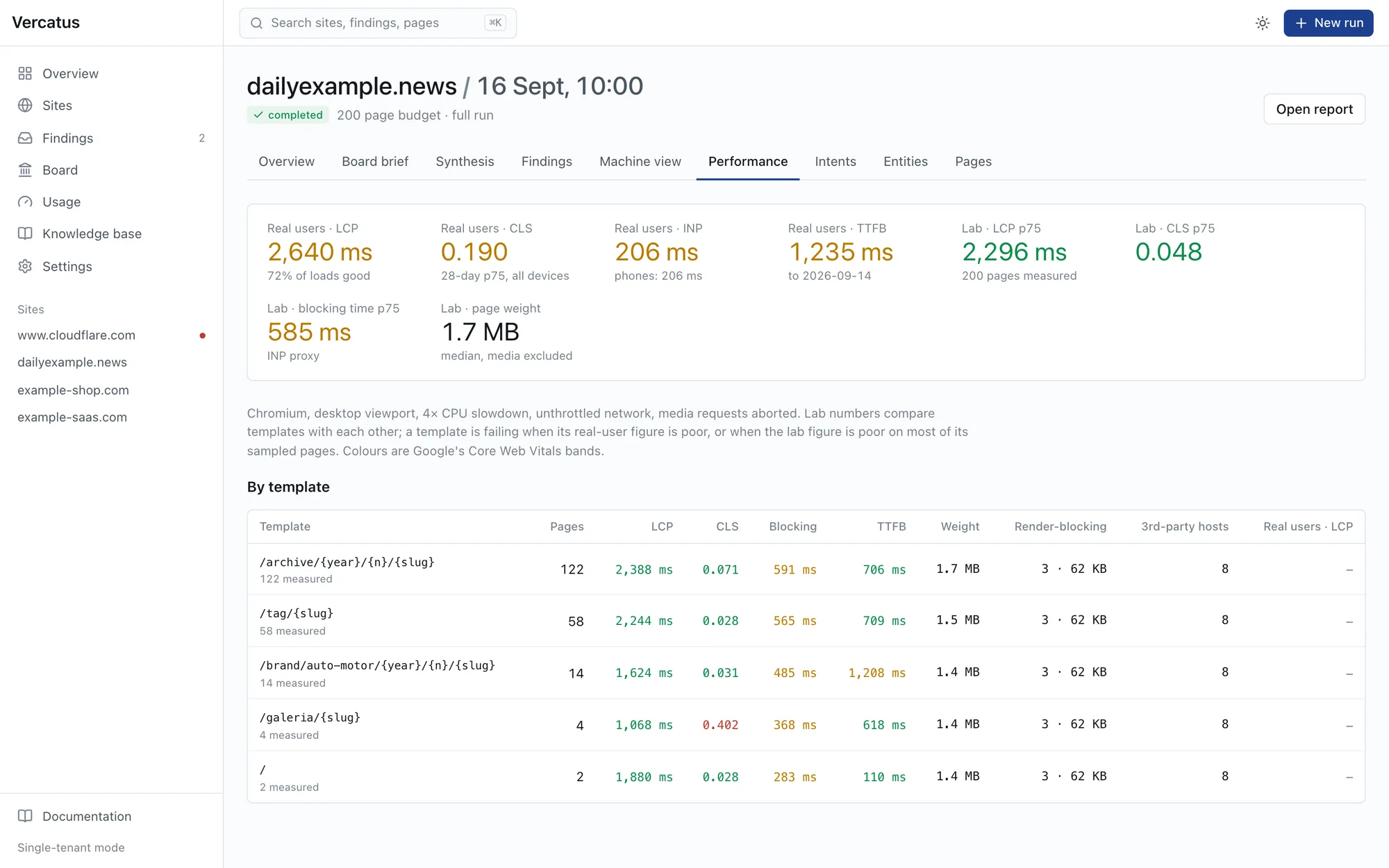
Performance by template
Core Web Vitals in the lab and from real users, page weight, blocking resources, third-party load — per template, coloured by Google's bands, so a slow article template is one ticket rather than a thousand slow URLs. Real-user data wins when lab and field disagree, and the run says so.
Board brief
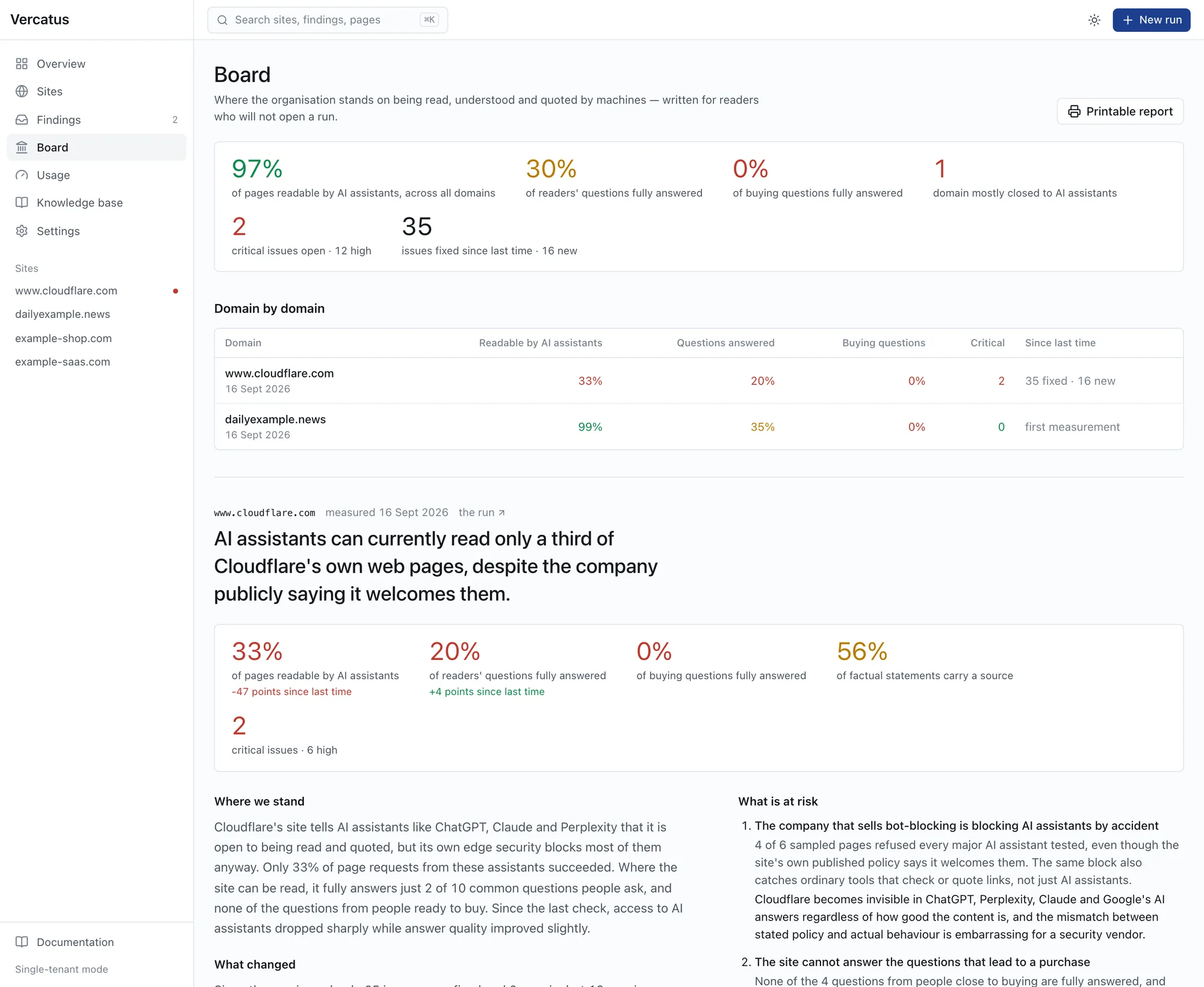
Five figures per domain, the position in plain language, at most three risks and three decisions — each with an owner and the cost of doing nothing — and what changed since last time. Printable, one page per domain plus a portfolio summary. The brief may not introduce numbers of its own.
Change runs
Weekly, no model calls. The same pages re-checked, and what moved reported: new, resolved and regressed findings, pages that changed or vanished, AI access that opened or closed.
Alerts
Posted to Slack only when there is something to say: new severe findings, regressions, access changes, failures. A quiet week stays quiet.
Reports and API
Standalone reports that need no login, white-labelled if you want; a customer CLI; and an API for everything the workspace shows.
Knowledge base
137 evidence-graded hypotheses from search-engine documentation, IETF and W3C standards, peer-reviewed retrieval research and dated industry measurement — each with sources and a revalidation date.
Multilingual
Templates and languages are sampled separately; retrieval uses a multilingual model; the board brief is written in plain language whatever the site's language.
Signed crawler
Every request carries a verifiable signature and a published key. Identity, not evasion — a security team can allow-list us in one line.
What is next
Shipping in order
We say plainly what exists and what is planned. Everything above exists. Next, in this order:
- Search Console and analytics — so a finding can be measured against traffic, not only against visibility capacity.
- Citation tracking — which answer engines cite which property, checked weekly.
- CMS webhooks and ticketing — a change run when a template ships; findings exported to Jira or Linear with their evidence.
See it on your own site
Send a sitemap URL. We run a full analysis and walk you through it.